

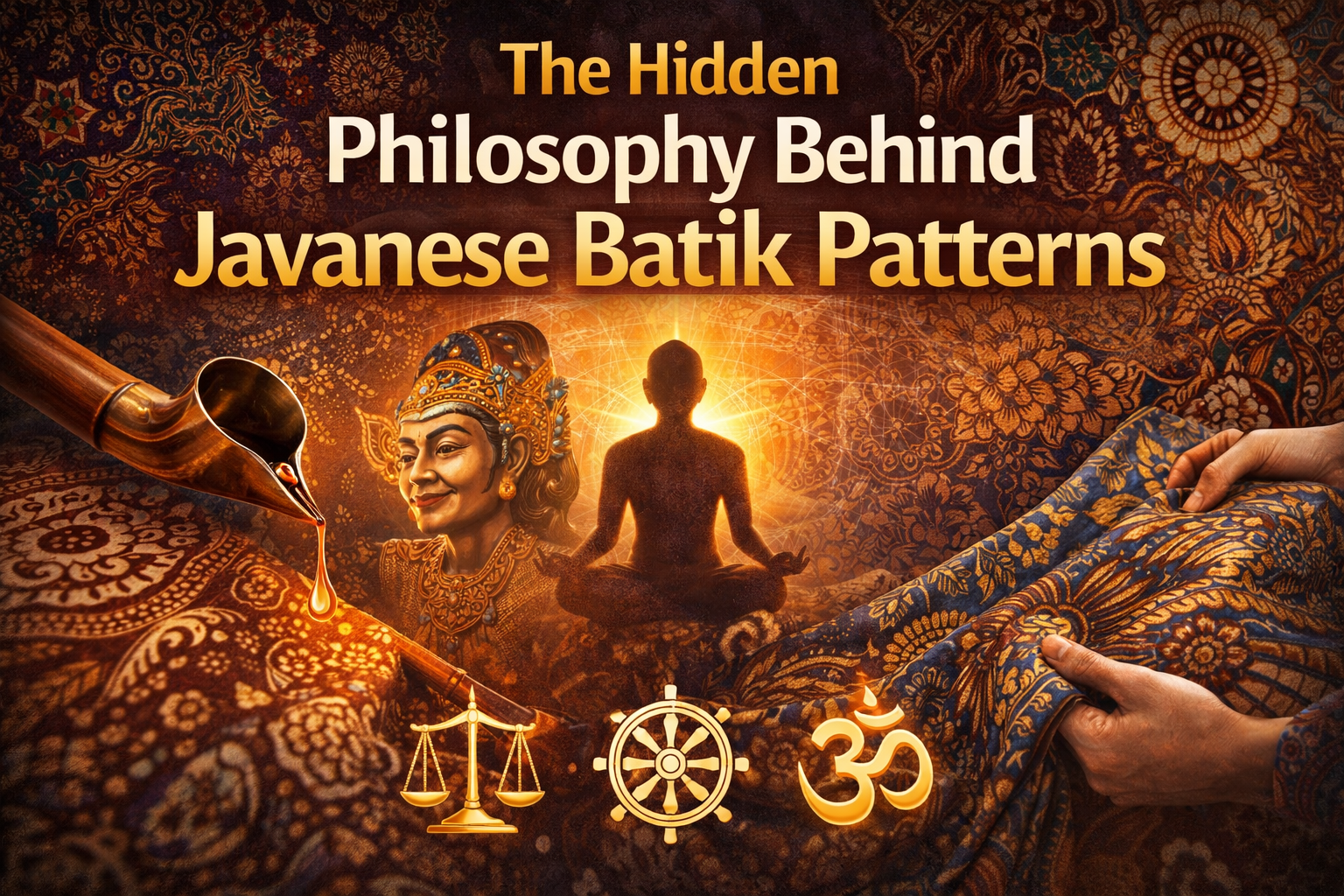
Batik is not just fabric; it is a “written” prayer. In the land of Java, every stroke of wax and every dip of dye carries a weight of wisdom. For centuries, Javanese batik patterns have served as a silent language, communicating the wearer’s social status, spiritual journey, and hopes for the future.
1. Parang: The Sacred Symbol of Power
The Parang pattern is one of the oldest and most sacred Javanese batik patterns, often associated with the Mataram dynasties. The diagonal “S” shape represents the ocean waves, symbolizing an unending struggle and the spirit of never giving up.
- The Philosophy: Just as waves never stop hitting the shore, a leader must never stop striving for greatness.
- Historical Fact: In the past, certain types like Parang Rusak were “forbidden patterns” (Awisan) only to be worn by kings and royalty.
2. Kawung: The Geometry of the Universe
The Kawung pattern consists of four circles intersecting to form a floral shape. It is one of the most recognizable Javanese batik patterns.
- The Philosophy: The four circles represent the four directions of the compass (North, South, East, West) and the center represents the source of life or the Divine. It teaches us about self-control and staying centered amidst worldly chaos.
- Symbolism: It is often likened to the fruit of the Aren (palm tree), which has a white heart—signifying purity of thought and heart.
3. Sawat: The Cosmic Garuda
If you see a pattern that looks like large wings, that is Sawat. This pattern is deeply rooted in Hindu-Javanese mythology.
- The Philosophy: The wings represent Garuda, the mount of Lord Vishnu. It symbolizes power, protection, and the connection between the earthly and spiritual realms.
- Usage: Often found in wedding batiks, it is a prayer for the couple to have a strong and protected journey together.
WoW Learn: Language & Culture Insight
- Philosophical Term: Manunggaling Kawula Gusti — A Javanese concept often reflected in batik, meaning the union of the servant (human) with the Master (God).
- Nusantara (noun): A term used to describe the Indonesian archipelago, emphasizing its vast cultural diversity.




Leave a Reply